
SEO today is no longer just about keywords and backlinks.
Search engines have become significantly smarter, and technical SEO now plays a major role in determining how websites rank, perform, and deliver user experiences.
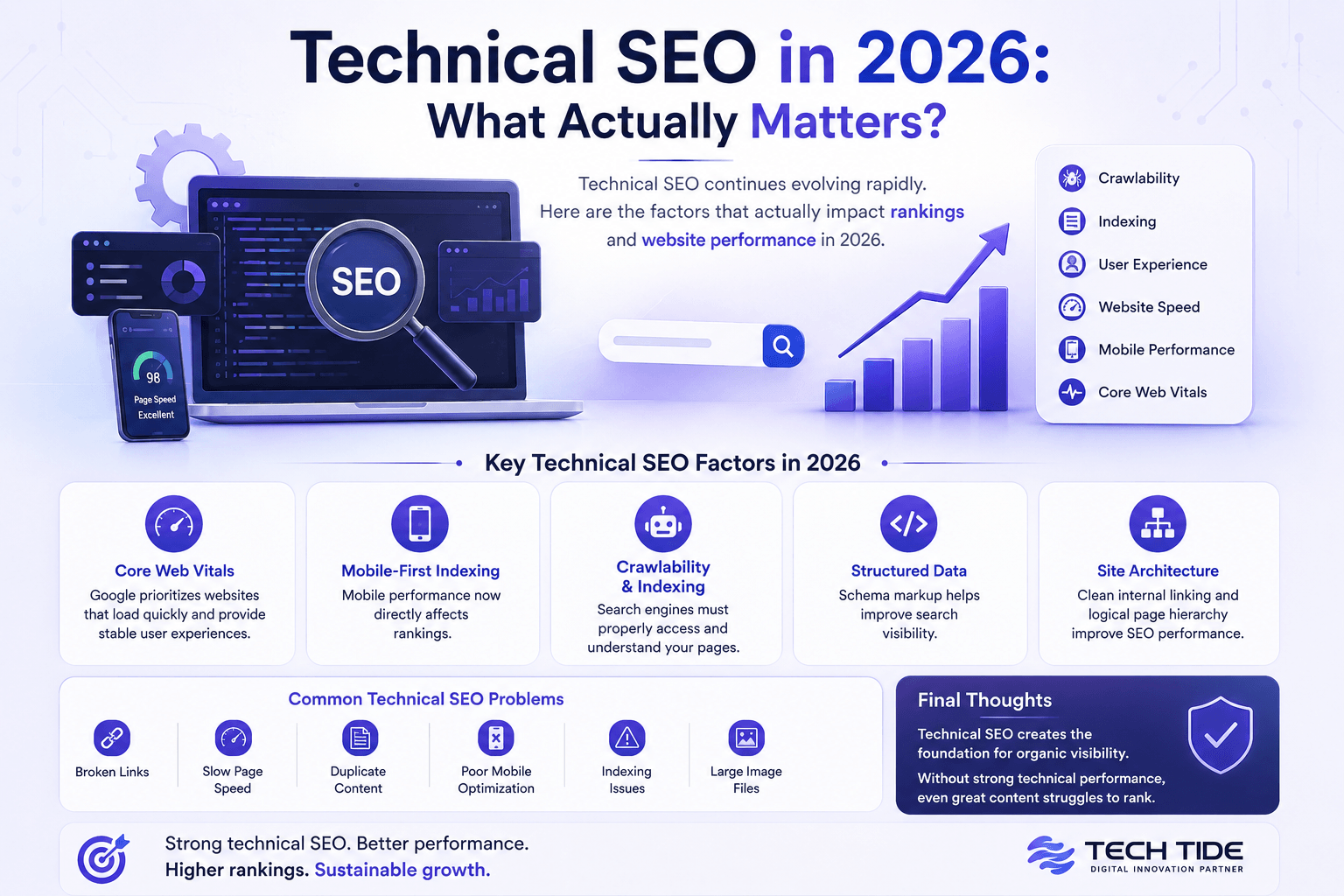
In 2026, Google and other search engines are focusing heavily on:
- crawlability
- indexing
- website speed
- mobile performance
- user experience
- Core Web Vitals
- structured data
- site architecture
Even the best content can struggle to rank if a website has poor technical performance.
Businesses that invest in strong technical SEO foundations are more likely to achieve:
- higher search visibility
- better organic traffic
- improved user engagement
- lower bounce rates
- stronger search rankings
Technical SEO is no longer optional — it has become a critical part of modern digital growth.
What is Technical SEO?
Technical SEO refers to the process of optimizing a website’s technical infrastructure so search engines can properly:
- crawl pages
- understand content
- index information
- deliver better rankings
Unlike traditional SEO that focuses mainly on content and keywords, technical SEO focuses on improving the overall performance and accessibility of a website.
A technically optimized website helps both:
- search engines
and - users
navigate the site more efficiently.
Why Technical SEO Matters More in 2026
Search engines now prioritize user experience more than ever before.
Modern algorithms evaluate websites based on factors such as:
- loading speed
- mobile responsiveness
- page stability
- security
- structured information
- navigation experience
This means businesses cannot rely only on keyword optimization anymore.
A website with poor technical health may experience:
- lower rankings
- slower indexing
- reduced visibility
- poor user retention
- decreased conversions
Technical SEO creates the foundation that supports all other SEO efforts.
Key Technical SEO Factors in 2026
Core Web Vitals
Core Web Vitals continue to play a major role in search rankings.
Google prioritizes websites that provide fast, smooth, and stable user experiences.
Core Web Vitals mainly measure:
- loading performance
- visual stability
- interaction responsiveness
If pages load slowly or shift unexpectedly while users interact with them, the overall experience suffers.
Improving Core Web Vitals helps businesses:
- improve SEO rankings
- reduce bounce rates
- increase engagement
- improve mobile usability
- create smoother browsing experiences
Website speed optimization has now become one of the most important aspects of technical SEO.
Mobile-First Indexing
Most internet users now browse primarily through mobile devices.
Because of this, Google uses mobile-first indexing, meaning the mobile version of your website is considered the primary version for ranking and indexing.
A poorly optimized mobile experience can negatively affect:
- rankings
- user engagement
- conversions
- website credibility
Businesses should ensure their websites are:
- fully responsive
- mobile-friendly
- fast-loading on smartphones
- easy to navigate
- optimized for smaller screens
Mobile optimization is no longer an additional feature — it is a necessity.
Crawlability & Indexing
Search engines must properly access and understand website pages before ranking them.
If search engine bots cannot crawl or index content effectively, pages may never appear in search results.
Common crawlability issues include:
- blocked pages
- broken internal links
- poor site structure
- incorrect robots.txt settings
- missing XML sitemaps
Strong crawlability helps search engines discover content faster and understand website hierarchy more efficiently.
Proper indexing ensures important pages appear in search results when users search for relevant queries.
Structured Data & Schema Markup
Structured data helps search engines better understand website content.
Schema markup provides additional context about pages, products, services, articles, reviews, FAQs, and other content elements.
Proper structured data can improve:
- search visibility
- click-through rates
- rich snippets
- featured results
- search appearance
Websites using structured data often appear more informative and visually enhanced in search results.
As search engines evolve, schema markup is becoming increasingly important for advanced SEO strategies.
Site Architecture & Internal Linking
Website structure plays a major role in both user experience and SEO performance.
A clean and logical site architecture helps users and search engines navigate content more effectively.
Strong site architecture includes:
- organized page hierarchy
- proper category structure
- clear navigation menus
- strategic internal linking
- easy content accessibility
Good internal linking also helps distribute SEO authority across pages while improving crawl efficiency.
Poor site architecture can confuse both users and search engines, reducing overall performance.
Website Security & HTTPS
Website security continues to remain an important ranking factor.
Users expect websites to be secure, especially when submitting personal information or making online purchases.
HTTPS encryption helps:
- protect user data
- improve trust
- increase credibility
- support SEO performance
Websites without proper security measures may experience reduced user confidence and lower search visibility.
Common Technical SEO Problems
Many businesses unknowingly face technical SEO issues that negatively affect rankings and website performance.
Broken Links
Broken internal or external links create poor user experiences and hurt crawl efficiency.
Users encountering broken pages are more likely to leave the website quickly.
Slow Page Speed
Slow-loading websites increase bounce rates and reduce engagement.
Large media files, poor hosting, excessive scripts, and unoptimized code often contribute to performance issues.
Duplicate Content
Duplicate pages confuse search engines and dilute SEO value.
Businesses should ensure content remains unique and properly optimized.
Poor Mobile Optimization
Non-responsive websites struggle to perform well in mobile-first indexing environments.
Poor mobile experiences often reduce conversions and rankings.
Indexing Issues
Important pages may fail to appear in search results due to incorrect indexing settings or crawl restrictions.
Regular technical audits help identify and fix these issues.
Large Image Files
Unoptimized images can significantly slow down websites.
Compressing and optimizing images improves page speed and user experience.
The Role of Technical SEO in User Experience
Technical SEO is closely connected to user experience.
A technically optimized website provides:
- faster loading
- smoother navigation
- better accessibility
- improved usability
- cleaner browsing experiences
Search engines increasingly reward websites that prioritize user satisfaction.
Good technical performance helps businesses retain users longer and improve conversion opportunities.
Why Technical SEO Audits Are Important
Technical SEO is not a one-time task.
Websites constantly evolve with:
- new pages
- plugin updates
- design changes
- content additions
- platform modifications
Regular technical SEO audits help businesses identify:
- performance issues
- crawl errors
- security problems
- indexing failures
- mobile usability concerns
Ongoing optimization ensures websites continue performing efficiently over time.
The Future of Technical SEO
Technical SEO will continue evolving as search engines become more advanced.
Future SEO trends may focus more heavily on:
- AI-driven search experiences
- voice search optimization
- predictive search behavior
- advanced page experience metrics
- semantic search understanding
- faster mobile performance
Businesses that adapt early and maintain strong technical foundations will have a significant advantage in organic search visibility.
Final Thoughts
Technical SEO has become one of the most important foundations of modern digital marketing.
Without strong technical performance, even high-quality content may struggle to achieve visibility in search engines.
Businesses that focus on:
- website speed
- mobile optimization
- crawlability
- structured data
- site architecture
- user experience
will create stronger SEO foundations for long-term organic growth.
In 2026, successful SEO is no longer just about ranking higher — it is about delivering faster, smarter, and more user-friendly digital experiences.