
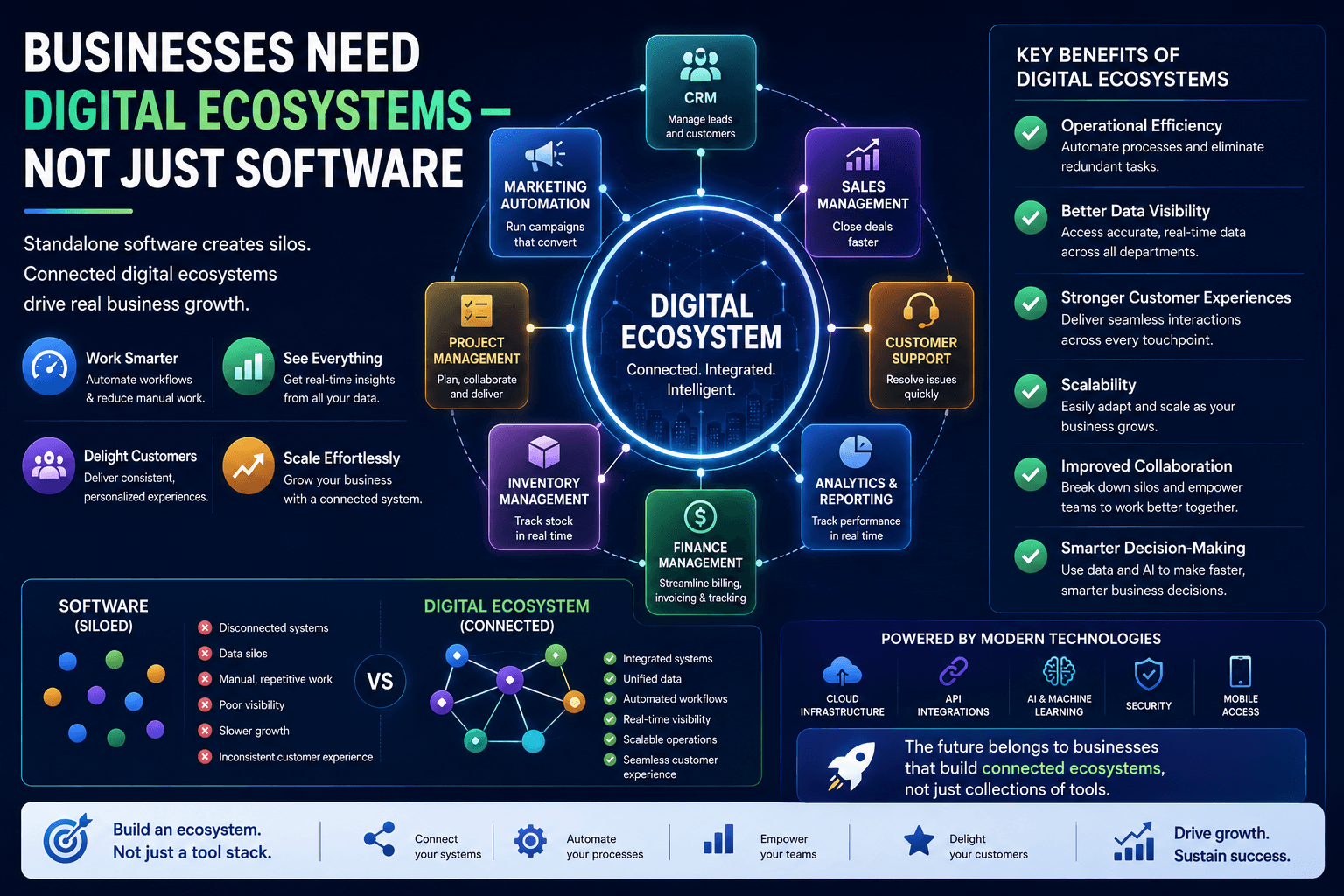
Many businesses invest in software expecting instant operational improvements.
However, simply purchasing multiple tools or platforms does not automatically solve business challenges.
Today, businesses require more than standalone software solutions.
They need connected digital ecosystems.
Modern companies often use multiple systems for:
- customer management
- sales operations
- marketing automation
- communication
- analytics
- inventory management
- project coordination
- customer support
When these systems operate independently without proper integration, businesses often face:
- disconnected workflows
- data silos
- operational inefficiencies
- communication gaps
- duplicated tasks
- poor customer experiences
A digital ecosystem helps businesses create a connected infrastructure where systems, teams, data, and processes work together seamlessly.
In today’s competitive digital environment, businesses that build strong digital ecosystems are often able to scale faster, operate smarter, and deliver better customer experiences.
What is a Digital Ecosystem?
A digital ecosystem is a connected network of technologies, software platforms, data systems, and workflows that work together to support business operations efficiently.
Instead of relying on isolated tools, businesses create integrated environments where information flows smoothly between systems.
A digital ecosystem may include:
- CRM systems
- ERP platforms
- marketing automation tools
- mobile applications
- cloud infrastructure
- analytics dashboards
- communication platforms
- eCommerce systems
- AI-powered tools
- customer support systems
The goal is to create a unified digital infrastructure that improves collaboration, automation, and operational efficiency.
Why Standalone Software is No Longer Enough
Many businesses still operate using disconnected software tools.
For example:
- sales teams use one platform
- marketing teams use another
- customer support uses separate systems
- finance operates independently
- operational data remains fragmented
This creates inefficiencies because teams cannot access centralized information easily.
Disconnected systems often result in:
- duplicated work
- delayed communication
- inconsistent customer experiences
- inaccurate reporting
- operational bottlenecks
As businesses grow, these problems become more difficult to manage.
Modern business operations require connected systems that support real-time collaboration and data visibility.
The Shift Toward Connected Business Systems
Businesses today operate in fast-moving digital environments where speed and efficiency matter significantly.
Consumers expect:
- faster responses
- personalized experiences
- seamless communication
- consistent interactions across platforms
To meet these expectations, businesses need systems that communicate with each other effectively.
For example:
A customer inquiry submitted through a website should automatically connect with:
- CRM systems
- sales teams
- support platforms
- analytics dashboards
- marketing automation tools
This level of integration improves operational efficiency and customer experiences simultaneously.
Key Benefits of Digital Ecosystems
Improved Operational Efficiency
Connected systems reduce repetitive manual work.
Businesses can automate workflows such as:
- lead management
- customer onboarding
- reporting
- invoicing
- support ticket handling
- inventory tracking
Automation improves speed while reducing operational errors.
Teams spend less time switching between disconnected tools and more time focusing on business growth.
Better Data Visibility
One of the biggest advantages of digital ecosystems is centralized data access.
Businesses gain real-time visibility into:
- sales performance
- customer behavior
- operational efficiency
- marketing performance
- financial analytics
This helps decision-makers access accurate insights quickly.
Data-driven businesses are often more agile and competitive.
Stronger Customer Experiences
Modern customers interact with businesses through multiple channels.
A connected digital ecosystem helps businesses provide seamless experiences across:
- websites
- mobile apps
- social media
- customer support systems
- sales platforms
Integrated systems allow businesses to personalize interactions more effectively and respond faster to customer needs.
Better customer experiences often lead to:
- stronger loyalty
- improved retention
- higher engagement
- increased conversions
Scalability & Business Growth
As businesses expand, disconnected systems often create operational chaos.
Digital ecosystems support scalability by creating structured and automated operational environments.
Businesses can handle:
- higher customer volumes
- larger teams
- increased transactions
- multi-location operations
- growing datasets
without constantly rebuilding workflows from scratch.
Scalable digital ecosystems help businesses grow more sustainably.
Better Team Collaboration
Departments often struggle when systems are disconnected.
A unified ecosystem improves communication and collaboration between:
- marketing teams
- sales departments
- operations
- customer support
- finance teams
Cloud-based systems and centralized dashboards allow teams to work more efficiently together.
This reduces delays and improves overall productivity.
Core Components of a Modern Digital Ecosystem
Cloud Infrastructure
Cloud systems allow businesses to access data and tools from anywhere while improving flexibility and scalability.
CRM & Customer Management Systems
CRM platforms help businesses centralize customer information and improve relationship management.
Automation Tools
Automation platforms streamline repetitive operational tasks and improve efficiency.
Data Analytics & Dashboards
Analytics tools provide real-time insights for smarter business decisions.
Mobile Applications
Mobile accessibility improves customer engagement and operational flexibility.
API Integrations
APIs help different platforms communicate and exchange information seamlessly.
Common Challenges Businesses Face Without Digital Ecosystems
Businesses relying on disconnected systems often experience:
- communication gaps
- inconsistent data
- slower operations
- poor reporting accuracy
- customer experience issues
- duplicated tasks
- inefficient workflows
These inefficiencies can slow down growth and reduce competitiveness.
Digital Ecosystems & AI Integration
Artificial Intelligence is becoming increasingly important within modern digital ecosystems.
AI can enhance ecosystems through:
- predictive analytics
- intelligent automation
- personalized recommendations
- AI-powered chatbots
- smart reporting systems
- customer behavior analysis
Businesses that combine AI with connected digital systems often gain stronger operational advantages.
Why Digital Transformation Requires Ecosystems
Digital transformation is not simply about purchasing software tools.
True transformation happens when businesses create connected operational environments where systems work together intelligently.
Technology should support:
- scalability
- automation
- customer experiences
- decision-making
- collaboration
- operational efficiency
Without integration, businesses often end up with fragmented digital infrastructures instead of efficient ecosystems.
The Future of Business Technology
The future of business operations will increasingly depend on:
- connected systems
- automation
- AI integration
- cloud infrastructure
- data-driven operations
- scalable digital ecosystems
Businesses that invest in ecosystem-driven technology strategies will likely become more agile and competitive in evolving digital markets.
Final Thoughts
Modern businesses need more than isolated software solutions.
They need connected digital ecosystems that support efficiency, scalability, collaboration, and long-term growth.
A strong digital ecosystem helps businesses:
- automate operations
- improve customer experiences
- centralize data
- streamline workflows
- scale more efficiently
- make smarter decisions
In today’s digital landscape, businesses that focus only on software may struggle with disconnected operations.
The companies that succeed long-term will be the ones that build intelligent, integrated, and scalable digital ecosystems.