
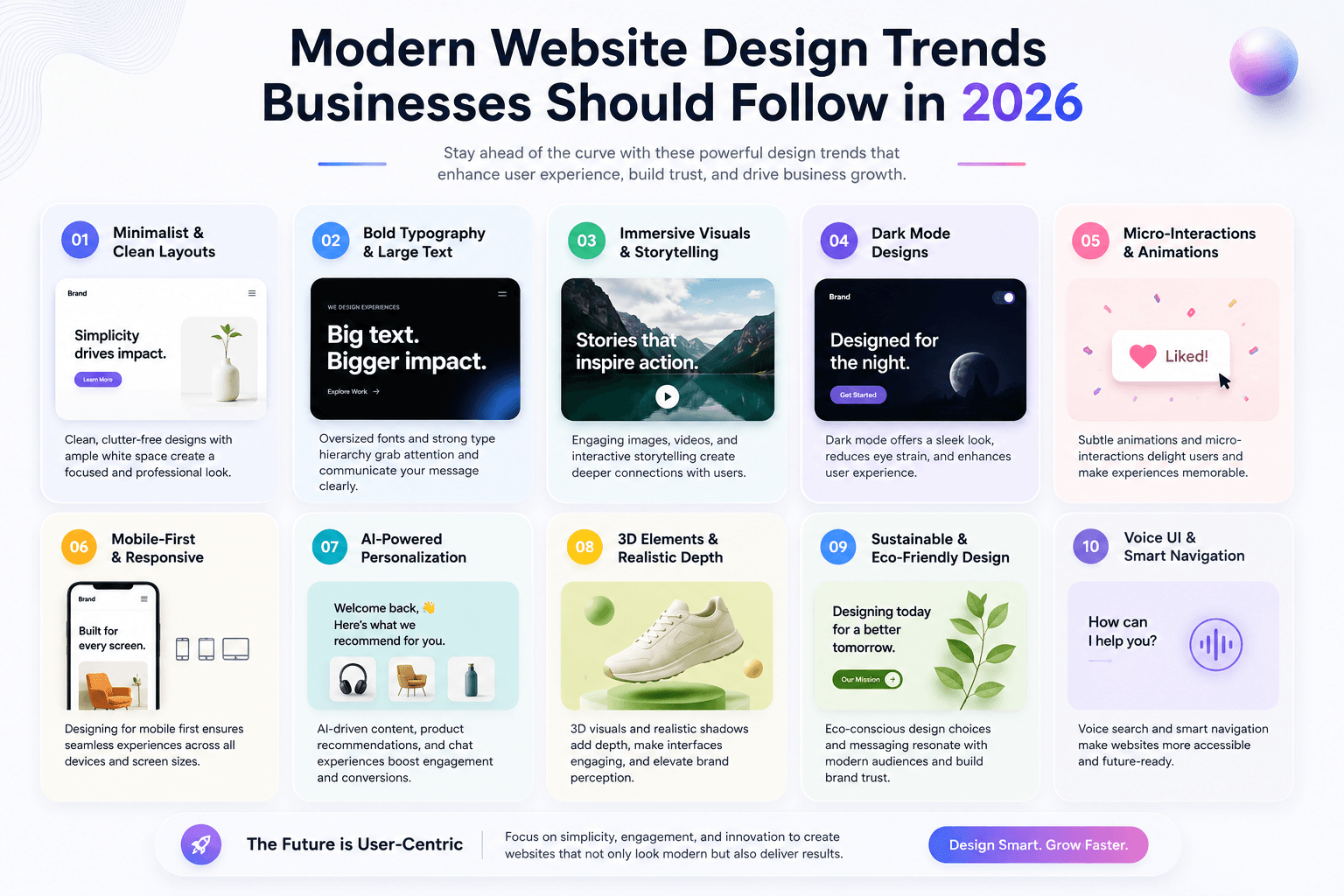
Website design trends continue to evolve rapidly.
In 2026, businesses are focusing on:
- speed
- minimalism
- interactivity
- accessibility
- AI-powered experiences
- mobile-first design
A modern website is no longer just about visuals — it’s about performance and user experience.
Key Trends in 2026
Minimal & Clean Interfaces
Simple layouts improve readability and reduce user distractions.
Dark Mode Experiences
Dark-themed interfaces continue growing due to aesthetics and usability.
AI-Powered Personalization
Websites are increasingly adapting content based on user behavior.
Motion & Micro Interactions
Small animations improve engagement and create smoother experiences.
Mobile-First Architecture
Most traffic now comes from mobile devices.
Why Modern Design Matters
Modern websites:
- improve trust
- increase conversions
- reduce bounce rates
- improve SEO performance
- strengthen brand perception
Final Thoughts
Businesses that continue using outdated websites risk losing customer attention and trust.
A modern digital experience has become a competitive advantage.
Why Responsive Web Design Is More Important Than Ever
Front Card Content
Category
Web Development
Short Description
Users browse websites from multiple devices every day. Here’s why responsive web design is now essential for modern businesses.
CTA
Read More →
Full Blog Content
Introduction
Responsive design is no longer optional.
Users expect websites to work smoothly across:
- smartphones
- tablets
- laptops
- desktops
- smart devices
What is Responsive Web Design?
Responsive web design allows websites to automatically adapt to different screen sizes and devices.
Why It Matters
Better User Experience
Responsive websites feel smoother and easier to navigate.
Improved SEO
Google prioritizes mobile-friendly websites.
Higher Conversion Rates
Users are more likely to stay and interact with responsive websites.
Lower Bounce Rates
Poor mobile experiences drive users away quickly.
Final Thoughts
A responsive website directly impacts:
- user trust
- SEO rankings
- conversions
- brand perception
Businesses that ignore responsiveness risk losing customers.